
Landlord’s Meter
In this section
Landlord’s meter
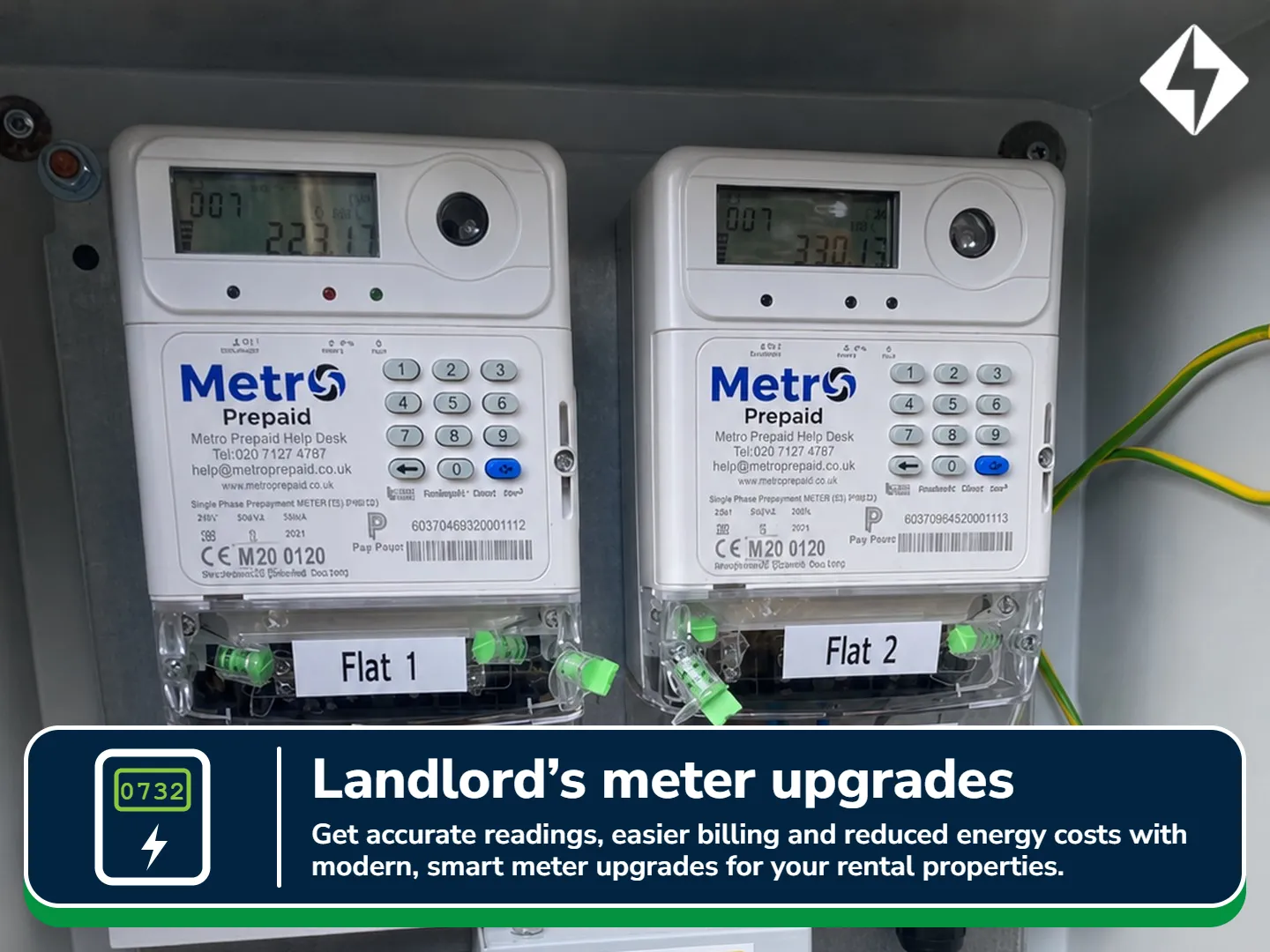
Where your tenants pay for their own electricity, a landlord’s meter lets you supply them from your solar and battery system, so you can recoup the cost of the installation.
- MCS certified
- TrustMark registered
- RECC member
- NAPIT registered
Your system, supplying your tenants
You own the system
Solar panels and a battery are installed on your property.
Supplied through your meter
Your tenants use electricity from your system, measured through a landlord’s meter.
You recoup the cost
Recharging tenants for the electricity they use helps pay back your investment.
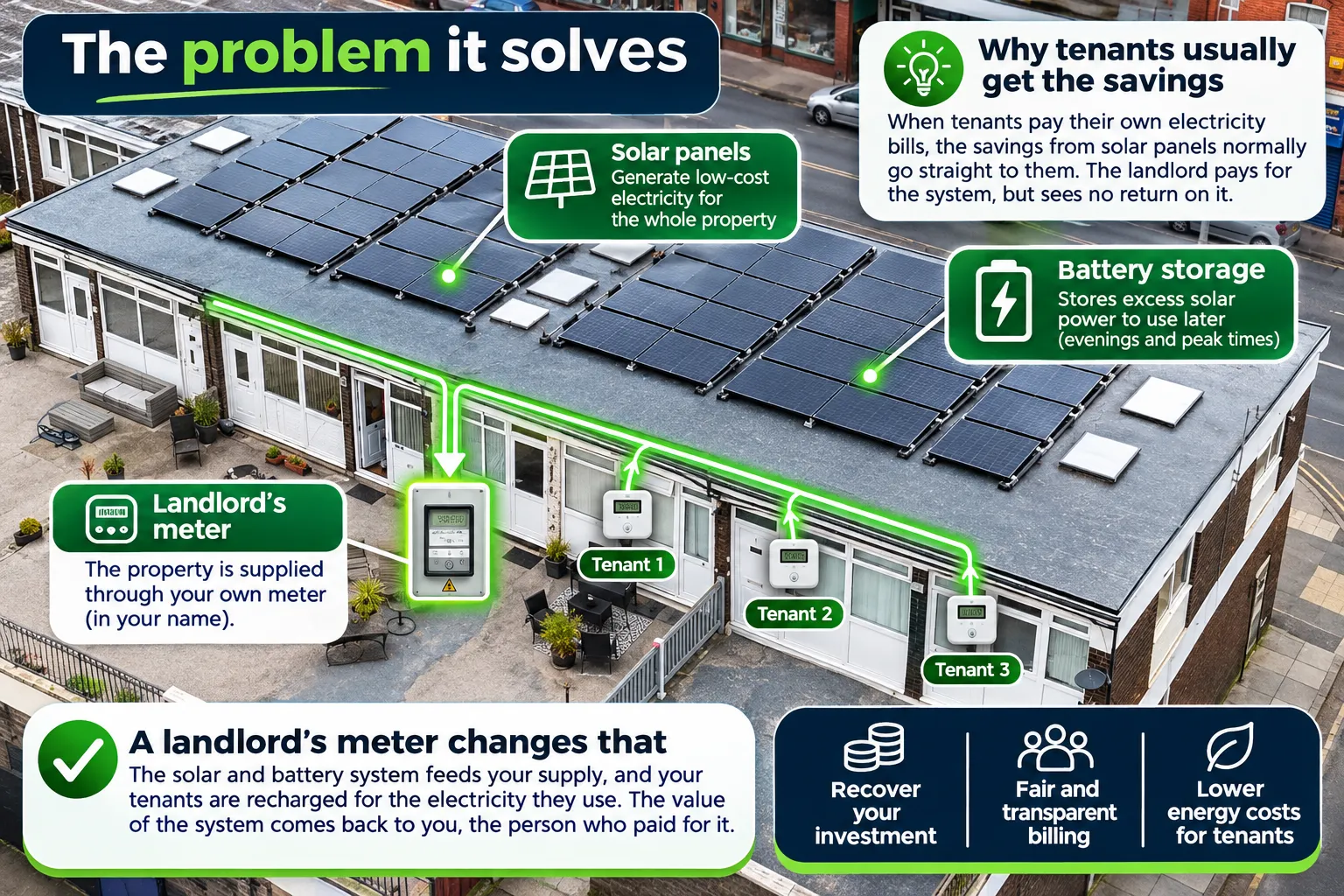
Why tenants usually get the savings
When tenants pay their own electricity bills, the savings from solar panels normally go straight to them. The landlord pays for the system, but sees no return on it.
A landlord’s meter changes that. The property is supplied through your own meter, the solar and battery system feeds that supply, and your tenants are recharged for the electricity they use. The value of the system comes back to you, the person who paid for it.
When a landlord’s meter makes sense
Tenants pay for electricity
If your tenants pay their own bills, a landlord’s meter lets you share in the value of the system you paid for.
Multi-let buildings
Blocks, converted houses and HMOs with a single supply can often be set up with one system serving the whole building.
Long-term owners
The longer you hold the property, the more of the system’s cost you recover, and it adds value to the building.
The equipment we install
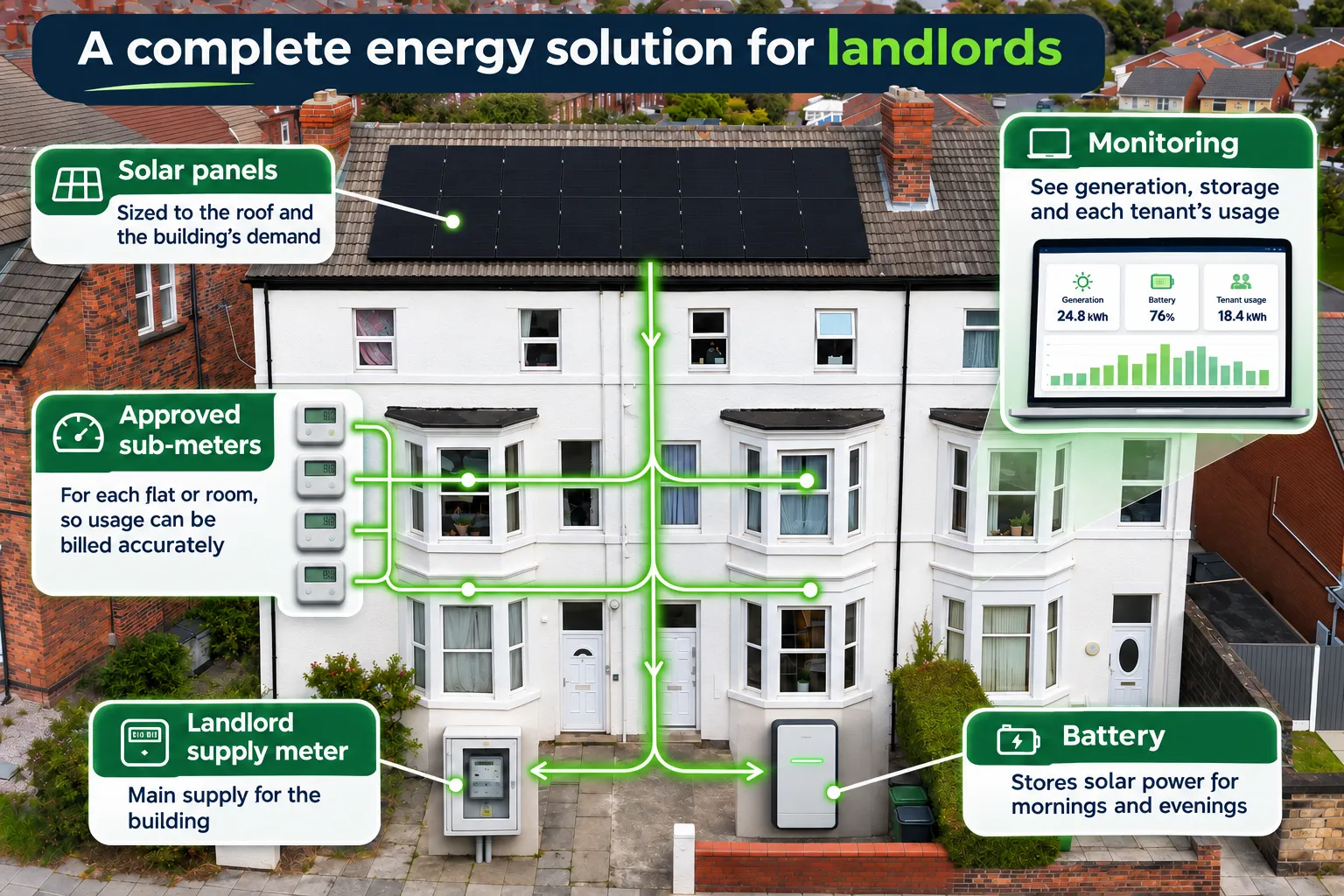
Every landlord’s meter project is designed around the building, but most include the same main parts.
- Solar panels sized to the roof and the building’s demand
- A battery to store solar power for mornings and evenings
- A landlord supply meter for the building
- Approved sub-meters for each flat or room, so usage can be billed accurately
- Monitoring, so you can see generation, storage and each tenant’s usage
Good for you, good for your tenants
Benefits for you
A return on the cost of your solar and battery system, a better EPC rating, and a building that is cheaper to run and more attractive to let.
Benefits for your tenants
Electricity generated on the roof above them, with clear, metered bills. Solar and battery also help the property meet the EPC C standard coming in 2030.
Things to consider before you start
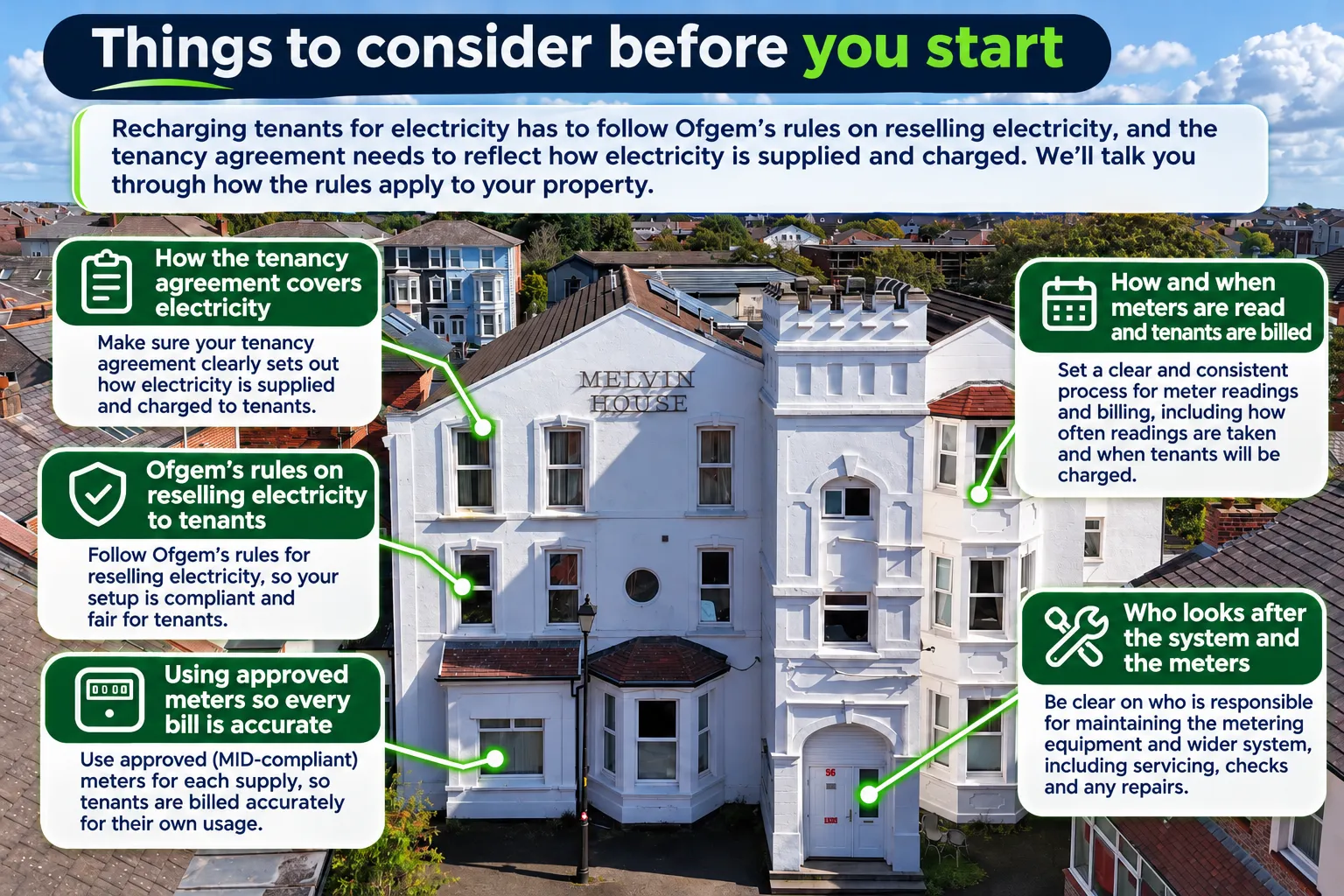
Recharging tenants for electricity has to follow Ofgem’s rules on reselling electricity, and the tenancy agreement needs to reflect how electricity is supplied and charged. We’ll talk you through how the rules apply to your property.
- How the tenancy agreement covers electricity
- Ofgem’s rules on reselling electricity to tenants
- Using approved meters so every bill is accurate
- How and when meters are read and tenants are billed
- Who looks after the system and the meters
How it works
Assessment
We look at the property, the supply and how it’s metered now.
Design
Solar, battery and metering designed together.
Installation
Fitted and commissioned, with DNO paperwork handled.
Handover
Your meters and monitoring set up and explained.
Why landlords work with us
One team, start to finish
Assessment, design, metering and installation from the same accredited team.
Work around your tenants
We arrange access with you and your tenants and keep disruption to a minimum.
Portfolio friendly
One building or several, we can plan the work across your portfolio and phase it to suit you.
Accredited
MCS certified, TrustMark registered, RECC members and NAPIT registered.
Common questions
No. It depends on the building, the supply and the tenancy. We’ll tell you honestly after the assessment.
This depends on how the property is set up. We’ll go through it with you before any work starts.
No. Ofgem sets rules on reselling electricity to tenants. We’ll explain how they apply to you.
Your tenants still have power. The building takes electricity from the battery, or from the grid through your landlord supply, as normal.
Often, yes. We look at the existing system and the metering and tell you what would need to change.
You might also be interested in
Find out if a landlord’s meter suits your property
Book a free assessment and we’ll talk you through it.